
WELCOME BONUS 300%
UP TO €2000 + 100
FREE SPINS
UP TO €2000 + 100
FREE SPINS
Home → Blackjack
Blackjack at City Slots: Variants, Rules and Payouts
Ace Split: only one card per hand
The Blackjack Liberal Vegas Strip variant allows resplitting Aces, which improves the RTP by approximately 0.08 percentage points compared to restrictive rules. This rule modifier contrasts with the standard limitation where a split Ace receives only one additional card, preventing further doubling or splitting actions. Consequently, players benefit from a slightly lower house edge of 0.28 percent when this liberal condition is active.
In contrast, most other blackjack tables enforce a strict policy where split Aces receive exactly one card per hand. This restriction significantly reduces the potential value of splitting low-value pairs but remains standard for preserving the casino's mathematical advantage. Players should note that failing to recognize this limitation can lead to incorrect strategic decisions during gameplay.
The impact of this rule is measurable in the long-term return, as seen in the 99.54% RTP of the 6-deck game with DAS and DOA. While the ace-splitting rule alone offers a minor statistical improvement, its combination with soft-17 standing and double-after-split rules creates a more favorable environment. Understanding these specific rule sets helps players identify tables that offer better theoretical returns than standard variations.
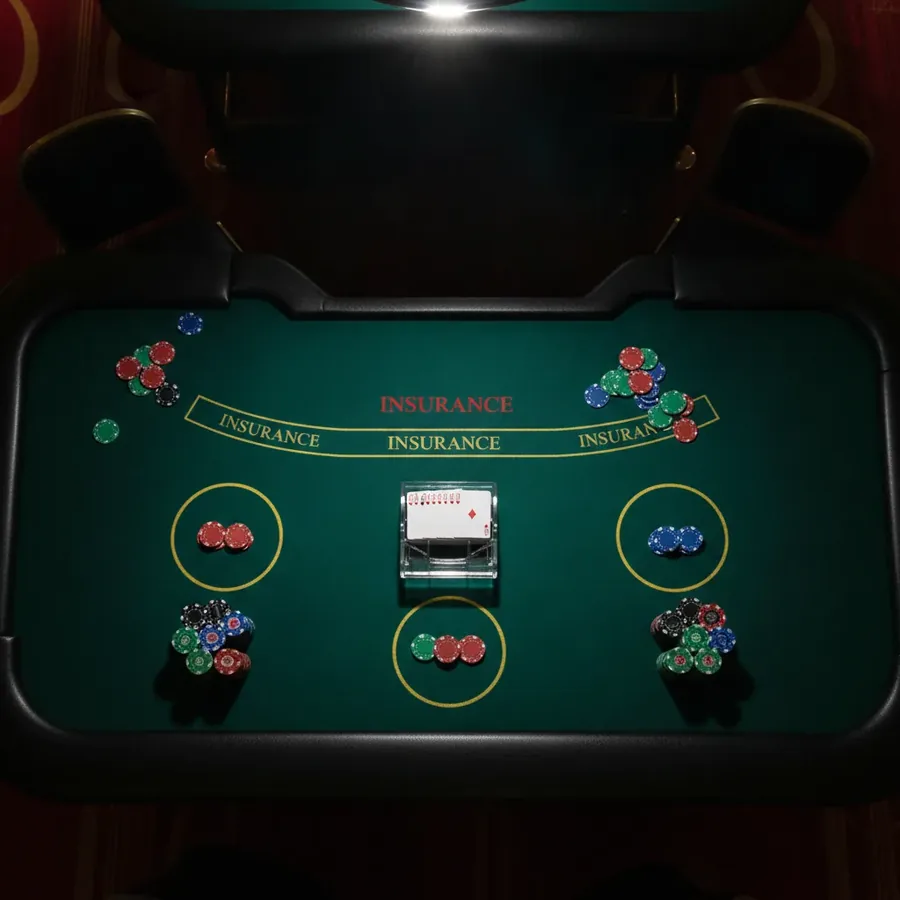
Check table limit before the first bet
Quantum Blackjack Plus Live by Playtech supports wagers ranging from 1 EUR up to 5,000 EUR per round. This maximum limit accommodates high-stakes players seeking substantial payouts through quantum multipliers that reach up to 1,000x on three-card combinations totaling 21 points. The wide betting range ensures that both casual players and VIPs can find suitable stakes without hitting immediate caps.
Lightning Blackjack by Evolution presents a different ceiling, capping individual bets at 2,500 EUR per hand. Although the number of players is unlimited, the financial exposure per spin is strictly bounded by this lower threshold compared to other live dealer options. Players must verify their account limits against this specific table constraint before attempting to place larger wagers.
Infinite Blackjack also by Evolution matches the higher 5,000 EUR limit found in the Playtech offering. With unlimited seats available, the table structure prioritizes accessibility over exclusive high-limit restrictions, yet the monetary cap remains identical to the Quantum variant. Comparing these limits reveals that while seat availability varies, the maximum financial commitment per hand stays consistent across major providers.
Continuous Shuffling Machine shuffles after each round
Most online live dealer tables utilize continuous shuffling mechanisms or digital algorithms that effectively reset the deck composition after every single hand dealt. This process eliminates any possibility of card counting, as the sequence of cards remains entirely random and unpredictable for each new round. The resulting house edge remains fixed at the theoretical values provided, such as 0.46% for the 6-deck S17 game.
Physical casinos often use Continuous Shuffling Machines (CSMs) to achieve similar results, ensuring that played cards are immediately returned to the shoe. In the digital realm, this technological equivalent guarantees that past outcomes have zero influence on future probabilities, maintaining the integrity of the 99.57% RTP for Quantum Blackjack Plus. Players relying on pattern recognition will find no statistical advantage in subsequent spins.
The absence of deck penetration means that strategies dependent on tracking remaining high or low cards are rendered ineffective across all listed live games. Whether playing Evolution’s Lightning Blackjack with its 99.56% RTP or Infinite Blackjack at 99.47%, the shuffle frequency prevents any shift in the house edge. This constant reshuffling ensures that the advertised Return to Player percentages remain stable regardless of previous session results.
Splitting tens costs expected value: better stand
Standard basic strategy dictates that players should always stand on a hard total of 20, formed by splitting tens being a statistically losing proposition. Dividing two ten-value cards creates two hands starting with 10, which historically perform worse than maintaining a strong 20 against the dealer’s upcard. This error increases the house edge beyond the baseline 0.46% offered by the optimal 6-deck S17 variant.
The mathematical penalty for splitting tens is significant, as it transforms a winning expectation into a negative one in most scenarios. Unlike splitting eights, which aims to rescue weak hands, splitting tens sacrifices a probable win for two uncertain outcomes. Data shows that adhering to the correct strategy preserves the 99.54% RTP, while deviation erodes this value rapidly over time.
Players observing the Blackjack 3 Decks game with a 98.15% RTP might notice how even minor rule changes compound strategic errors. When combined with poor splitting habits, the effective house edge can exceed the stated 1.85% due to the inherent disadvantage of the 6:5 payout. Recognizing that standing on 20 is mandatory protects the player from unnecessary losses in both standard and premium blackjack formats.
Splitting costs double bet: plan budget
Executing a split action requires placing an additional wager equal to the original bet, effectively doubling the total amount risked on that hand. For example, a 10 EUR initial bet becomes a 20 EUR total exposure if the player chooses to split the pair. This immediate increase in capital requirement demands careful bankroll management to sustain multiple rounds of play without depleting funds prematurely.
The financial implication extends to side bets and insurance, where costs accumulate rapidly if the player engages in optional wagers alongside splits. Insurance pays 2:1 but carries a 7.47% house edge, making it a costly addition unless the player employs advanced counting techniques. Combining insurance with split actions significantly raises the average cost per hour, reducing the overall longevity of the gaming session.
Budget planning must account for the potential of multiple splits, as some rules allow resplitting up to four hands from a single pair. If a player starts with 50 EUR and splits twice, the total active stake could reach 200 EUR depending on the table limits. Understanding this exponential growth in bet size helps players set realistic loss limits and avoid chasing losses with increasingly larger wagers.
Blackjack variants at a glance
| Variant | Payout | House edge | Rule | Bet range |
|---|---|---|---|---|
| Blackjack Surrender (Late Surrender) – Regel-Effekt | n.a. (Regel-Modifikator) | −0.08 Prozentpunkte | Spieler gibt Hand nach Dealer-Blackjack-Prüfung auf, verliert die Hälfte des Einsatzes. Verbessert RTP um ca. 0.08 Prozentpunkte. Early Surrender ist wesentlich wertvoller (bis −0.6 Prozentpunkte), aber extrem selten. | Rückzahlung 50% des Einsatzes |
| Blackjack Split / Double / H17 – Regel-Effekte | n.a. (Regel-Modifikatoren) | H17 +0.22 Prozentpunkte; RSA −0.08 Prozentpunkte; DAS −0.14 Prozentpunkte | Dealer Hits Soft 17 verschlechtert RTP um 0.22 Prozentpunkte; Resplit Aces verbessert um 0.08 Prozentpunkte; Double After Split verbessert um ca. 0.14 Prozentpunkte; 6 Decks statt 8 – ca. 0.02 Prozentpunkte. | Double – Einsatz ×2 mit einer Karte; Split – bis 4 Hände; Ass-Split meist mit einer Karte. |
| Blackjack Insurance / Versicherung (6–8 Decks) | 92.53% | 7.47% | Separate Nebenwette bis 50% der Hauptwette, wenn der Dealer ein Ass hat. Basisstrategie schreibt IMMER Ablehnung vor (außer Karten zählen bei True Count ≥ +3). Bei einem Deck Vorteil ≈ 5.88% | Insurance 2:1 |
| Blackjack 6 Decks, S17, DAS, DOA, Auszahlung 3:2, Basisstrategie | 99.54% | 0.46% | Dealer steht auf Soft 17; Verdopplung auf jeder Zweierkarte; Verdopplung nach Split erlaubt; keine Aufgabe. Basisstrategie ist für diesen Wert zwingend | Blackjack 3:2, normaler Gewinn 1:1, Insurance 2:1 |
| Blackjack Auszahlung 6:5 statt 3:2 (6 Decks) | 98.15% | 1.85% | Ersatz von 3:2 durch 6:5 fügt exakt +1.39 Prozentpunkte zum Vorteil des Casinos hinzu – stärker als jede andere Regeländerung. Bei $10 Einsatz zahlt Blackjack $12 statt $15. | Blackjack 6:5, Gewinn 1:1 |
| Blackjack Ein Deck, klassische Regeln, 3:2 | 99.85% | 0.15% | Weniger Decks = niedrigerer Vorteil; ein Deck gibt ca. −0.48 Prozentpunkte gegenüber 8 Decks. Oft durch 6:5 Auszahlung kompensiert. | Blackjack 3:2, Gewinn 1:1 |
One Deck vs Eight Decks in House Edge
The Blackjack Ein Deck variant with classic rules and a 3:2 payout delivers an RTP of 99.85% against a house edge of 0.15%. This single-deck configuration provides approximately minus 0.48 percentage points relative to the eight-deck baseline, significantly lowering the casino advantage. Consequently, players utilizing optimal strategy on this specific table retain more capital over extended sessions compared to multi-deck games.
Conversely, the standard six-deck game featuring S17, DAS, DOA, and a 3:2 blackjack payout yields an RTP of 99.54% with a house edge of 0.46%. The additional decks increase the probability of dealer busts less frequently than in single-deck scenarios, thereby raising the mathematical expectation for the house. Players must adjust their bankroll management accordingly when switching between these distinct deck configurations.
Some operators offer Liberal Vegas Strip with liberal rules including S17, DAS, resplitting, and late surrender, achieving an impressive RTP of 99.72% and a house edge of just 0.28%. This specific rule combination represents the most favorable mathematical environment available among standard variants, provided the player adheres strictly to basic strategy charts.
Stand-on-17 Rule and Its Meaning for Players
The Dealer Hits Soft 17 (H17) rule negatively impacts player returns by increasing the house edge by exactly 0.22 percentage points compared to standing on soft 17. This adjustment forces the dealer to draw an additional card on a soft seventeen, statistically reducing the frequency of dealer busts during critical hands. Such rule variations directly diminish the overall RTP for participants engaging in high-volume play sessions.
In contrast, the Dealer Stands on Soft 17 (S17) rule is present in the standard six-deck game that offers an RTP of 99.54% and a house edge of 0.46%. This specific configuration allows the dealer to hold a soft seventeen without drawing, which slightly improves the player's long-term expected value relative to hitting variants. Understanding this distinction is crucial for selecting tables with superior mathematical conditions.
The Quantum Blackjack Plus Live table operated by Playtech maintains strict adherence to standard standing rules while offering quantum multipliers up to 1,000x on three-card twenty-one combinations. This live variant achieves an RTP of 99.57% under optimal strategy, demonstrating that advanced multiplier features can coexist with traditional dealer standing protocols without compromising base game fairness.
16 vs 10 played incorrectly: most common error
Incorrectly playing a hard sixteen against a dealer ten results in a significant loss of expected value due to deviations from established basic strategy protocols. The correct action requires hitting the sixteen rather than standing, as standing guarantees a loss whenever the dealer achieves a final hand of seventeen or higher. Adhering to these rigid mathematical guidelines prevents unnecessary erosion of the player's bankroll over time.
The Blackjack Insurance side bet, available when the dealer shows an ace, carries a detrimental RTP of 92.53% and a house edge of 7.47%. Basic strategy dictates always declining this insurance wager unless the player employs card counting techniques with a true count greater than or equal to plus three. Accepting this bet on a sixteen versus ten scenario further exacerbates existing negative expectations.
Payout structures heavily influence decision-making accuracy, with standard blackjacks paying 3:2 while insurance bets return 2:1 on the side wager amount. A $10 blackjack payout amounts to $15, whereas a 6:5 variant would only return $12, highlighting how minor rule changes drastically alter potential winnings. Players must prioritize tables with favorable payout ratios to mitigate losses from suboptimal strategic decisions.
Statistics display saves the last 100 rounds
The Infinite Blackjack table by Evolution accommodates unlimited seats at each virtual station, allowing broad participation without physical seating constraints or delays. Participants can engage with four distinct side bets including Any Pair, 21+3, Hot 3, and Bust It, which operate alongside the main game mechanics. This format supports an RTP of 99.47% when players employ optimal strategic adjustments for every dealt hand.
Lightning Blackjack by Evolution introduces lightning multipliers up to 25x on winning hands, creating volatile outcomes that deviate from standard statistical averages. The game permits unlimited players simultaneously, ensuring continuous action regardless of table capacity limits found in traditional brick-and-mortar establishments. An RTP of 99.56% applies to the base game before considering the impact of these random multiplier events.
Quantum Blackjack Plus Live by Playtech features quantum multipliers reaching up to 1,000x specifically on three-card twenty-one combinations within its proprietary interface. The betting range spans from 1 EUR to 5,000 EUR, accommodating both casual participants and high-stakes professionals seeking substantial variance. This specific live dealer product maintains an RTP of 99.57% assuming perfect strategic execution throughout the session.
When does the table max bet apply?
The Infinite Blackjack table enforces a maximum bet limit of 5,000 EUR per round, establishing a clear boundary for high-stakes wagering activities. This cap ensures responsible gaming practices while still allowing significant exposure for players utilizing aggressive progression systems or chasing large wins. Exceeding this limit triggers automatic rejection of the wager by the software platform.
Lightning Blackjack imposes a stricter maximum bet constraint of 2,500 EUR per round, reflecting the heightened volatility introduced by its lightning multiplier feature. This lower ceiling protects both the operator and the player from extreme financial swings associated with rare but massive multiplier payouts. Participants must adjust their stake sizes accordingly to remain within these defined operational parameters.
Quantum Blackjack Plus Live matches the highest tier of the Infinite variant with a maximum bet limit of 5,000 EUR per round. This alignment suggests similar risk profiles and payout potentials across Playtech and Evolution's premium live offerings despite differing multiplier mechanisms. Players should verify current limits before placing large wagers to avoid transaction failures during active gameplay.
Split, Double Down, and Surrender in Numbers
Blackjack Surrender allows the player to give up a hand after the dealer checks for blackjack, losing exactly 50 percent of the stake. This specific rule improves the RTP by approximately 0.08 percentage points compared to games without surrender options available to users. The payout structure ensures that only half the initial wager is forfeited when this strategic move is executed correctly during play.
Early surrender is significantly more valuable, reducing the house edge by up to 0.6 percentage points, but it remains extremely rare in modern online casino environments. Most platforms only offer late surrender, which provides a smaller mathematical advantage than the early variant previously mentioned to players seeking better odds. Consequently, the financial benefit is limited to the standard 0.08 percent improvement rather than the higher potential savings of the earlier option.
Double After Split (DAS) further reduces the house edge by approximately 0.14 percentage points, allowing players to double their bet on hands created from split pairs. Resplitting Aces improves the RTP by an additional 0.08 percentage points, though this feature typically permits only one card per new ace hand. These combined rule modifications create a more favorable environment for strategic players who understand the mathematical implications of each available action.
Six Card Charlie Pays Immediately with Six Cards
The Quantum Blackjack Plus Live table by Playtech features quantum multipliers that can reach up to 1,000x on three-card combinations totaling 21 points. This live dealer game accepts stakes ranging from 1 to 5,000 EUR, offering high limits for serious players looking to maximize their potential returns. The theoretical return to player stands at 99.57 percent when optimal strategy is applied consistently throughout every round of the fast-paced session.
Lightning Blackjack by Evolution offers unlimited players at the table with lightning multipliers reaching up to 25x on any winning hand achieved by participants. Stakes range from 1 to 2,500 EUR, providing flexible betting options for various bankroll sizes while maintaining an RTP of 99.56 percent. The presence of these random multipliers adds significant variance to the standard gameplay, potentially rewarding lucky streaks with substantial payouts beyond normal wins.
Infinite Blackjack also provided by Evolution supports unlimited seats at the table with stakes between 1 and 5,000 EUR and an RTP of 99.47 percent. Players can access four side bets including Any Pair, 21+3, Hot 3, and Bust It, which add extra layers of complexity to the basic game. These side wagers introduce different risk profiles and potential payouts that differ significantly from the main blackjack hand outcomes experienced by users.
Why Loss Progression Quickly Reaches Table Limit
A standard loss progression system doubles the bet after every loss, meaning a sequence of ten consecutive losses turns a 1 EUR stake into 1,024 EUR. Since Infinite Blackjack caps bets at 5,000 EUR, this progression fails before recovering losses because the required next bet exceeds the maximum allowable limit for the table. The mathematical reality forces players to stop or reset their strategy long before the theoretical recovery point is reached in practice.
Quantum Blackjack Plus Live has a maximum bet limit of 5,000 EUR, which restricts aggressive progression strategies even further due to the high variance introduced by multipliers. A ten-loss streak starting at 1 EUR requires a 1,024 EUR bet for the eleventh round, which is within limits, but the subsequent 2,048 EUR bet approaches the cap quickly. This constraint prevents the exponential growth necessary for martingale systems to function effectively over extended periods of play for most users.
Lightning Blackjack imposes a stricter maximum bet of 2,500 EUR, making it impossible to sustain a standard doubling progression past eight consecutive losses starting from 1 EUR. The tenth bet would require 512 EUR, and the eleventh would need 1,024 EUR, leaving little room for error before hitting the table ceiling. These limits ensure that no single betting strategy can exploit the game mechanics indefinitely, protecting both the operator and the average player from ruinous losses.
Insurance Pays 2:1 Yet Still Costs Money
Insurance is a side bet paying 2:1 if the dealer has a blackjack, but it carries a house edge of 7.47 percent for six to eight deck shoes. This negative expectation makes insurance a poor value proposition unless the player is counting cards and the true count reaches +3 or higher during the hand. For the vast majority of players following basic strategy, accepting insurance results in a guaranteed long-term loss of capital over time.
The theoretical return to player for insurance stands at a mere 92.53 percent, significantly lower than the main game RTP of 99.54 percent for standard blackjack. This disparity highlights the cost of taking insurance, as the player sacrifices expected value in exchange for a small chance of recovering half the original bet. Basic strategy explicitly advises against taking insurance under normal conditions to preserve the overall profitability of the blackjack session for informed participants.
In single-deck games, the house edge for insurance drops to approximately 5.88 percent, still representing a negative expectation for the average player using standard tactics. Even with this slightly improved ratio, the decision remains unfavorable unless specific card counting advantages are present and actively utilized by the skilled participant. Most casual gamblers ignore this side bet entirely to avoid the substantial erosion of their bankroll caused by the inherent mathematical disadvantage built into the wager.
What Percentage Does Blackjack Count Towards Bonus?
Table games contribute only 10 percent towards the wagering requirement for the 300 percent welcome bonus up to 2,000 EUR plus 100 free spins offered by the casino. Slots contribute 100 percent, meaning every euro wagered on slots counts fully toward clearing the bonus terms, whereas blackjack bets require ten times the volume to achieve the same progress. This discrepancy heavily favors slot players who wish to convert bonus funds into withdrawable cash efficiently without excessive playthrough obligations imposed by the operator.
Consider a scenario where a player deposits 1,000 EUR and receives a 3,000 EUR bonus, totaling 4,000 EUR to wager. If they play blackjack exclusively, they must wager 40,000 EUR to meet the requirement because of the 10 percent contribution rate. In contrast, playing slots would only require 4,000 EUR in total wagers to clear the same bonus amount, demonstrating the massive efficiency difference between game types.
The Liberal Vegas Strip variant offers the lowest house edge at 0.28 percent, but its slow contribution rate makes it inefficient for bonus clearance compared to high-volatility slots. While blackjack minimizes financial loss during play, the extended time required to fulfill the turnover obligation increases exposure to variance and potential errors. Players prioritizing bonus conversion speed should allocate their bankroll primarily to slots rather than investing significant time in table games with minimal contribution percentages.
Contact
Live - online chat
Banking





Providers










Slots City 2026